Measurement layer
Cell voltage monitoring, pack current sensing, NTC mapping and accuracy review for each series group.
Turn battery pack requirements into a clean BMS architecture: measurement front end, balancing, switching, current sensing, thermal sensing, communication and fault response.
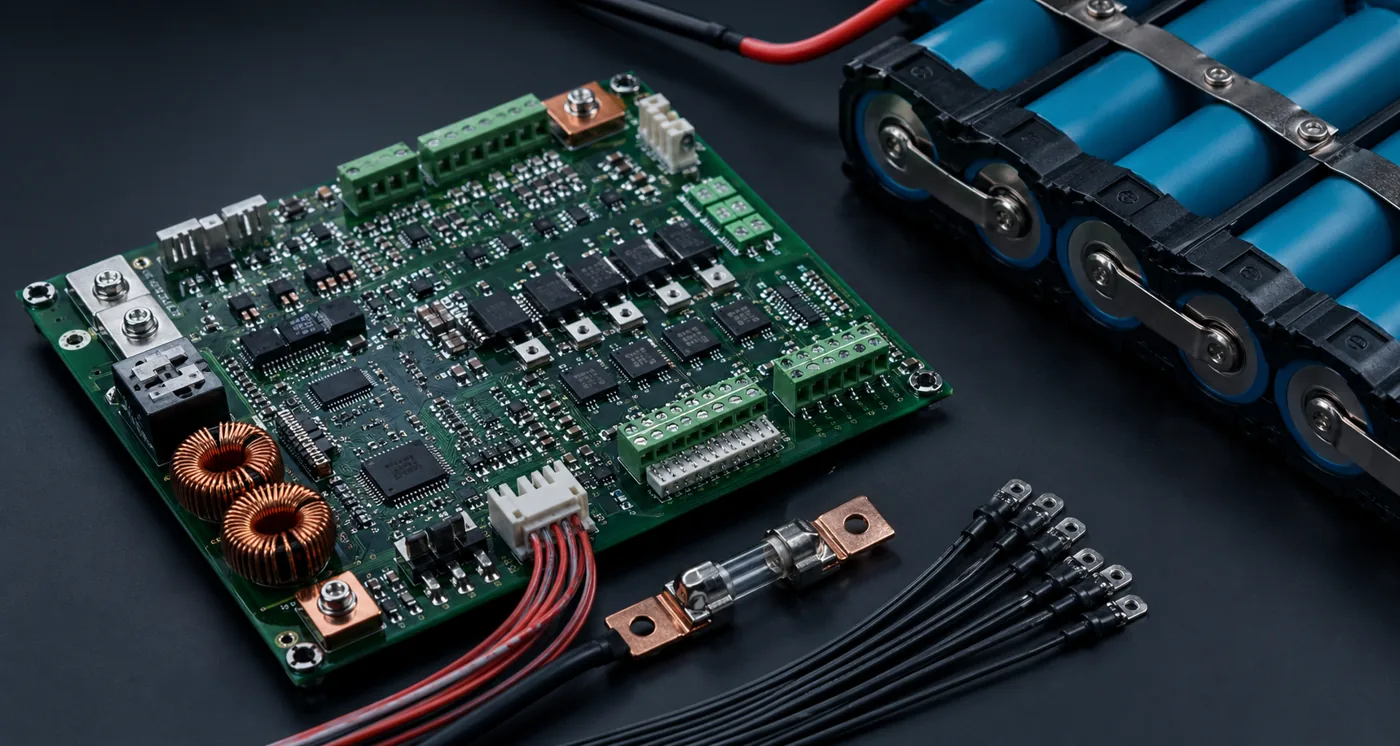
A useful BMS design covers sensing, switching, protection, telemetry and test planning — not just an IC choice.
Cell voltage monitoring, pack current sensing, NTC mapping and accuracy review for each series group.
Over-voltage, under-voltage, over-current, short-circuit, temperature limits and charge-inhibit logic.
MOSFET or contactor strategy, precharge, CAN/UART telemetry, data logging and service diagnostics.
Start with pack topology, select functional modules, review calculated ratings and export a concept spec for engineering discussion.
Chemistry, series count, parallel count, load power, capacity, operating temperature and enclosure assumptions.
BMS IC, shunt, MOSFET bank, NTC sensors, balancing current, fuse, precharge and communication module.
Review current rating, thermal sensing density, derating, fault behaviour and test requirements.
The public version is a concept tool for course learning, consulting and early product planning.